For people with strong life purpose, making healthier choices may take less effort

Ever wonder how some people seem to meet their fitness goals with ease and love eating healthy foods while others constantly struggle to do either? According to a new study from the Communication Neuroscience Lab at the Annenberg School, people with stronger life purpose are more likely to accept messages promoting health behavior change than those with a weaker sense of purpose. And this might be because they experience less decisional conflict while considering health advice. “Purpose in life has been robustly associated with health in previous studies,” says postdoctoral…

Read More

Octopus-inspired wearable sensor

Wearable electronics that adhere to skin are an emerging trend in health sensor technology for their ability to monitor a variety of human activities, from heart rate to step count. But finding the best way to stick a device to the body has been a challenge. Now, a team of researchers reports the development of a graphene-based adhesive biosensor inspired by octopus “suckers.” They report their findings in ACS Applied Materials & Interfaces. For a wearable sensor to be truly effective, it must be flexible and adhere fully to both wet…

Read More

How a member of a family of light-sensitive proteins adjusts skin color

A team of Brown University researchers found that opsin 3 — a protein closely related to rhodopsin, the protein that enables low-light vision — has a role in adjusting the amount of pigment produced in human skin, a determinant of skin color. When humans spend time in the sun without proper skin protection, the sun’s ultraviolet (UV) radiation signals the skin to produce more melanin — which protects against the cancer-causing effects of the radiation — and become darker. There are two parts to solar UV radiation: short wavelength radiation…

Read More

Obesity: The key role of a brain protein revealed

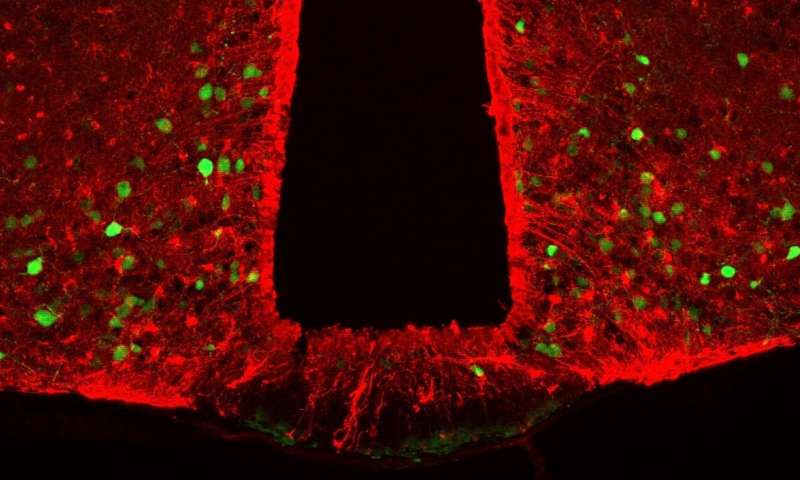
Regardless of how much you exercise or how balanced your diet is, controlling your weight is more brain-related than you might have thought. In a study published in the Journal of Clinical Investigation, researchers from the University of Montreal Hospital Research Centre (CRCHUM) show for the first time in mice that the acyl-CoA-binding protein, or ACBP, has a direct influence on the neurons that allow rodents and humans to maintain a healthy weight. In April 2015, Thierry Alquier, a CRCHUM researcher and the lead author of this study, had already revealed,…

Read More