The Animation Show – by DON HERTZFELDT



Jennifer Lawrence and Adele are friends and they both definitely know how to party. The celebs were spotted at Pieces gay bar in Manhattan on Friday night, and they both appeared to be having the best time. According to The Sun, Adele got up on stage to speak to drag queen Brita Filter. She introduced herself to the crowd saying, “Hi my name’s Adele,” before screaming, “She’s f***ing engaged!” in reference to Lawrence’s recent engagement to Cooke Maroney. Adele also had the perfect explanation about what she’s been up to recently: “I’m actually at the moment a stay-at-home mom,” she told the crowd.…
Read MoreA nationwide cohort study of all children born in Denmark to Danish-born mothers between 1999 through 2010 concluded that the mumps, measles, and rubella (MMR) vaccine does not increase the risk of autism, does not trigger autism in susceptible children, and is not associated with clustering of autism cases following vaccination. The findings are published in Annals of Internal Medicine. The hypothesized link between measles, mumps, rubella (MMR) vaccine and autism continues to cause concern and challenge vaccine uptake. Currently, there is a concerning increase in measles cases in Europe and…
Read MorePhysical inactivity is a common factor in lifestyle diseases — and one that is often linked to the excessive consumption of fatty and/or sugary foods. The opposite scenario of excessive physical activity at the expense of caloric intake can also be harmful, as cases of anorexia nervosa illustrate. These data therefore point to the crucial need to research the neurobiological processes that control the respective motivations for exercise and food intake. A study by Inserm and CNRS researchers published on March 7, 2019 in JCI Insight reveals that the cannabinoid type 1…
Read More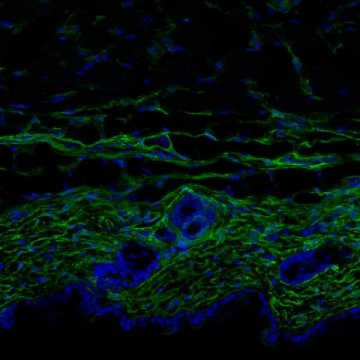
With age, our tissues lose their function and capacity to regenerate after being damaged. A study published today in Cell by scientists at the Institute for Research in Biomedicine (IRB Barcelona) and the Centro Nacional de Análisis Genómico of the Center for Genomic Regulation (CNAG-CRG) explains how dermal fibroblasts age. The main conclusion drawn is that these fibroblasts lose their cell identity, as if they had “forgotten” what they are, and consequently their activity is altered, thus affecting tissue. The study reveals the cellular and molecular pathways affected by ageing and proposes…
Read More