Learn to Drift – How to and Exercises with Drift 101



There’s a new angel in town! Today, Victoria’s Secret announced on Instagram that model Barbara Palvin has officially received her wings. The 25-year-old Hungarian has been modeling since the tender age of 13. She was discovered in Budapest, and then relocated to Asia where her career began to take off. At 17, Palvin made her runway debut for Prada during Milan Fashion Week Fall 2010 season. She went on to walk for top luxury brands like Chanel, Miu Miu, and Vivienne Westwood and landed campaigns with H&M and Armani just…
Read MoreCurrently approved in Canada and Europe for adults with medication-resistant depression and seizures, trigeminal nerve stimulation (TNS) has been found to be an effective and safe means of treatment for children with attention deficit hyperactivity disorder (ADHD), reports a study published in the April 2019 issue of the Journal of the American Academy of Child and Adolescent Psychiatry (JAACAP). TNS utilizes a small stimulator worn on a child’s clothes to emit a low-level current, powered by a 9-volt battery. Thin wires are connected to the device with an adhesive electrode patch…
Read MoreOf the 30 million Americans with diabetes, 90 to 95 percent have type 2, according to the Centers for Disease Control and Prevention. New research shows building muscle strength may be one way to lower risk for the disease. The study of more than 4,500 adults found moderate muscle mass reduced the risk for type 2 diabetes by 32 percent. The benefits were independent of cardiorespiratory fitness, and higher levels of muscle strength did not provide additional protection. The findings are published in the journal Mayo Clinic Proceedings. DC (Duck-chul) Lee,…
Read More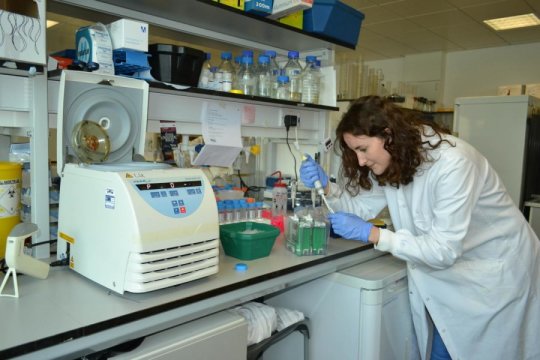
Our immune system is working every day to protect us from bacteria, viruses, and parasites, but it can also detect when our own cells are damaged. Research led by Lancaster University has now discovered how skin cells alert the immune system, when their DNA is damaged in the absence of infection. This DNA damage can come from a variety of sources, such as the sun’s UV rays, chemical agents like cigarette smoke, or from genotoxic drugs used in chemotherapy. There have been few studies carried out on the immediate effects…
Read More