No More Exhaust Myths



In a scientific first, Columbia neuroengineers have created a system that translates thought into intelligible, recognizable speech. By monitoring someone’s brain activity, the technology can reconstruct the words a person hears with unprecedented clarity. This breakthrough, which harnesses the power of speech synthesizers and artificial intelligence, could lead to new ways for computers to communicate directly with the brain. It also lays the groundwork for helping people who cannot speak, such as those living with as amyotrophic lateral sclerosis (ALS) or recovering from stroke, regain their ability to communicate with…
Read More
Lucy Hale is embracing self-love—and she now has a permanent symbol on her skin that she can look to when she needs to remember her worth and feel empowered. Hale took to Instagram last week to tell her followers about her new tattoo and its important message. “I got this tattoo recently as a symbol of self-love,” the actress wrote. “And that’s what this last year has been about…being alone (but not lonely), not settling and truly finding my inner light & loving who I am.” Hale, who lives by the mantra “be kind to…
Read More
Thirty minutes of morning exercise lowers blood pressure for the rest of the day among older men and women who are overweight or obese. And women who take brief, frequent breaks from sitting throughout the day can enhance the blood pressure benefits of morning exercise even more, according to new research published in the American Heart Association’s journal Hypertension. In a study of men and women, age 55 to 80, all of whom were overweight or obese, researchers wanted to find out whether the beneficial effect of morning exercise on blood…
Read More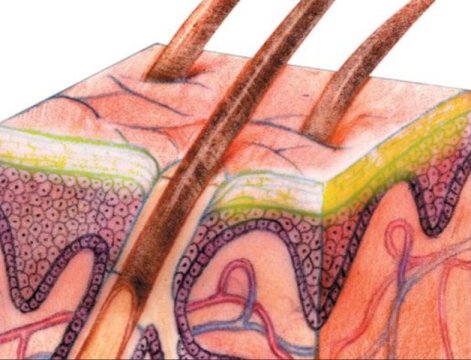
Atopic dermatitis, a common inflammatory skin condition also known as allergic eczema, affects nearly 20 percent of children, 30 percent of whom also have food allergies. Scientists have now found that children with both atopic dermatitis and food allergy have structural and molecular differences in the top layers of healthy-looking skin near the eczema lesions, whereas children with atopic dermatitis alone do not. Defining these differences may help identify children at elevated risk for developing food allergies, according to research published online today in Science Translational Medicine. The research was supported…
Read More