Turbocharged Vs Supercharged – Part 3


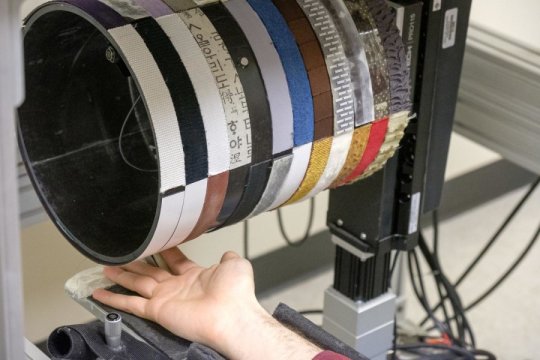
Our hands and fingertips are amazingly sensitive to texture. We can easily distinguish coarse sandpaper from smooth glass, but we also pick up more subtle differences across a wide range of textures, like the slick sheen of silk or the soft give of cotton. Information about texture is transmitted from sensors in the skin and through the nerves to the somatosensory cortex, the part of the brain responsible for interpreting the sense of touch. New research by neuroscientists at the University of Chicago shows that as neurons in this part…
Read More
A few weeks ago singer Bebe Rexha revealed that despite earning her first two Grammy nominations this year, a damper was put on her excitement when it came time to pick the perfect dress. In an Instagram video, Rexha explained that many designers refused to dress her because she’s “too big.” She’s a size 6-8. “You’re saying all the women in the world that are a size 8 and up are not beautiful and that they cannot wear your dresses. So to all the people who said I’m thick and I…
Read More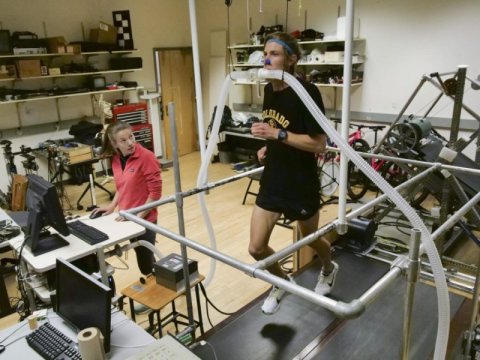
Think state-of-the-art shoes, performance diets and well-thought-out racing strategies are only for elite runners? Think again. In reality, the slower you are, the more such measures improve your finish times, suggests new University of Colorado Boulder research. “We found that at faster speeds, you get significantly less benefit from improving your running economy than you do at slower speeds,” said lead author Shalaya Kipp, a former graduate student in the Department of Integrative Physiology. The study, published in the journal Frontiers in Physiology today, takes a mathematical approach to answering a question…
Read More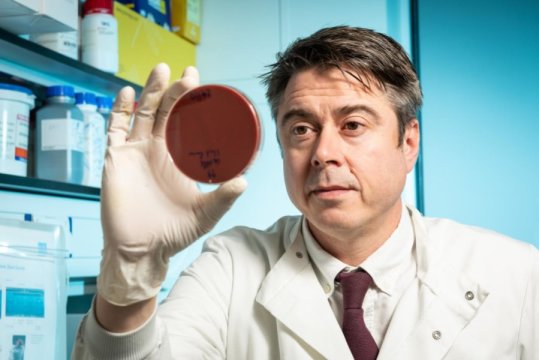
Forget MRSA and E. coli. There’s another bacterium that is becoming increasingly dangerous due to antibiotic resistance — and it’s present on the skin of every person on the planet. A close relative of MRSA, Staphylococcus epidermidis, is a major cause of life-threatening infections after surgery, but it is often overlooked by clinicians and scientists because it is so abundant. Researchers from the Milner Centre for Evolution at the University of Bath warn that the threat posed by this organism should be taken more seriously and use extra precautions for those at…
Read More