TUNING



The pill could be blurring your social judgement — but perhaps not enough so you’d notice. By challenging women to identify complex emotional expressions like pride or contempt, rather than basic ones like happiness or fear, scientists have revealed subtle changes in emotion recognition associated with oral contraceptive pill (OCP) use. Published in Frontiers in Neuroscience, their study found that OCP users were nearly 10% worse on average than non-users in deciphering the most enigmatic emotional expressions, raising questions over the possible impact of OCPs on social interactions in intimate relationships.…
Read More
You’ve seen her in hits like Life Itself, House, and my personal favorite, The O.C. But in addition to acting, Olivia Wilde is a mother of two, an activist, and all-around inspiring woman. Recently, she partnered with Dunkin’ Donuts for an event in New York City where a tiny home was fueled entirely by recycled coffee grounds (80,000 pounds, to be exact). The partnership made sense for Wilde, who is passionate about both coffee and sustainability. At the event, we had the opportunity to speak to the actress and got the scoop on a few other things…
Read More
You’ve just exercised for an hour, tracking the burned calories with a sense of satisfaction. Then comes a choice: munch on an apple or indulge in the chocolatey goodness of a brownie? A post-exercise snack can threaten to undo the gains (or losses) of a workout. But the decision itself may depend on when you make it, according to a new study from the University of Nebraska-Lincoln. The takeaway? Avoiding delay can keep temptation at bay. Nebraska’s Karsten Koehler, Christopher Gustafson and their colleagues conducted an experiment that asked two…
Read More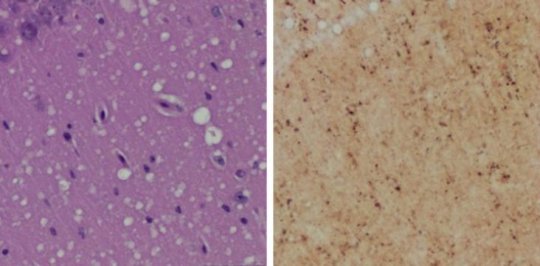
Prions can infect both humans and animals, causing Creutzfeldt-Jakob disease (CJD) in humans, mad cow disease in cattle, and chronic wasting disease in elk and deer. The infectious, misfolded protein particles often go undetected as they destroy brain tissue, causing memory loss, mobility issues, and ultimately death. Preclinical detection of prions has proven difficult, but new research suggests skin samples hold early signs of prion disease that precede neurologic symptoms. “Currently a definitive diagnosis of Creutzfeldt-Jakob disease is dependent on the examination of diseased brain tissue obtained at biopsy or…
Read More